
Scope of Care · A
Chronic low back pain
Last updated: 2026-09-20 · Prepared by licensed TCM physicians · Updated 2026-09
Key Points
Chronic low back pain is pain in the lower back lasting or recurring for more than 12 weeks. Most cases involve no serious pathology and are closely linked to muscle strain, disc and facet-joint degeneration, and postural load.
- The leading cause of disability worldwide; about 80% of people experience back pain at least once
- Most chronic low back pain is "non-specific" 鈥 imaging often explains surprisingly little
- Prolonged sitting, weak core muscles and heavy lifting are the three common drivers
- Acupuncture for chronic low back pain is well supported by evidence, and works best combined with exercise therapy
First, what cannot wait
- Saddle (perineal) numbness, bowel or bladder incontinence or retention 鈥 cauda equina syndrome; go to emergency care immediately
- Progressive weakness in both legs, or foot drop when walking
- Severe pain and inability to stand after lumbar trauma, or severe pain after minor force in someone with osteoporosis (suspect vertebral fracture)
- Unexplained fever, night pain that wakes you, or rapid weight loss (suspect infection or tumor)
- Persistent leg weakness or spreading numbness
- Changes in bowel or bladder habits while still controllable
- Pain steadily worsening despite 4-6 weeks of proper treatment
Understanding the Condition
Chronic low back pain is more than "throwing your back out" once. After three months of pain, the body usually has settled into a compensation pattern: tight lumbar muscles, a "lazy" deep core, protective stiffness during movement 鈥 pain and muscle function feed each other, so the less you dare to move, the stiffer you get, and the stiffer you get, the more it hurts.
In plain words: acute back pain is a "strain alarm"; chronic back pain is a "system imbalance". That is why treating only the painful spot often fails 鈥 the lumbar spine, abdomen and hips need to be restored as a whole.
Why It Keeps Coming Back
What sustains the pain is often not the original injury but the vicious circle that follows: pain 鈥 less activity 鈥 muscle deconditioning and tension 鈥 load concentrated on discs and facet joints 鈥 more pain. Sitting all day and a weak core make the lumbar spine bear static load again and again.
Both prolonged bed rest and long-term painkiller dependence deepen the cycle. Mainstream guidelines converge on the same advice: stay active, exercise specifically, add analgesics and manual therapy when needed 鈥 rather than "lying flat until it stops hurting".
Our Pattern-Based Approach
TCM calls this "lumbar bi (obstruction)" and first distinguishes excess from deficiency: excess patterns include cold-dampness (cold heavy pain, worse in rain), damp-heat (burning distending pain, bitter taste) and qi-blood stagnation (fixed dagger-like pain after injury); deficiency patterns include kidney-yang deficiency (cold pain relieved by warmth) and kidney-yin deficiency (weak dull aching with night heat). "The lumbar region is the house of the kidney" 鈥 chronic cases are usually mixed.
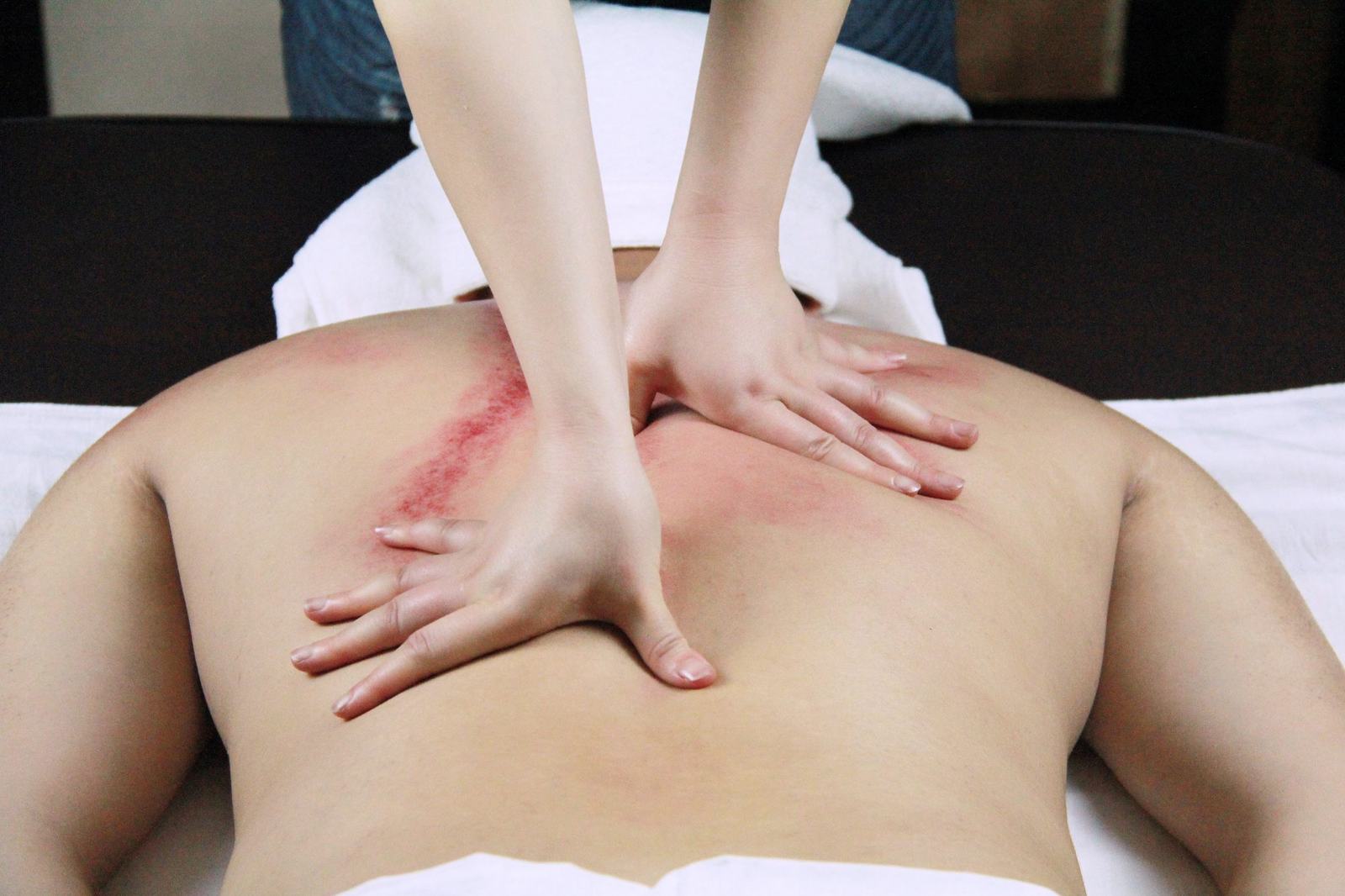
Acupuncture uses Shenshu (BL23), Dachangshu (BL25), Weizhong (BL40), Yaoyangguan (GV3) and ashi points, with lumbar tuina, cupping and moxibustion. We emphasize "needles, herbs and exercise together": treatment releases and warms, while home McKenzie extensions and core training consolidate the results, and Ba Duan Jin maintains them long-term.
Common patterns and treatment directions
| Pattern | Typical presentation | Approach |
|---|---|---|
| Cold-dampness pain | Cold, heavy lumbar pain, difficult turning, worse on rainy days, eased by warmth | Dispel cold-dampness, warm the channels: Shenshu (BL23), Yaoyangguan (GV3), Weizhong (BL40), with moxibustion and cupping |
| Damp-heat pain | Burning distending pain, bitter taste and irritability, dark scanty urine, red tongue with yellow greasy coat | Clear heat and drain dampness: Dachangshu (BL25), Yinlingquan (SP9), Weizhong (BL40); moxibustion avoided |
| Qi stagnation and blood stasis | Fixed stabbing pain refusing pressure, history of sprain or prolonged sitting, worse at night, dark tongue with stasis spots | Invigorate blood and move qi: ashi points, Geshu (BL17), Weizhong (BL40), with collateral pricking and tuina |
| Kidney-yang deficiency | Persistent cold lumbar ache, likes warmth and pressure, weak knees, cold intolerance, frequent night urination | Warm kidney-yang: Shenshu (BL23), Mingmen (GV4), Taixi (KI3), with governor-vessel moxibustion |
| Kidney-yin deficiency | Weak dull aching, restlessness with poor sleep, heat in palms and soles, dry mouth and throat | Nourish kidney-yin: Shenshu (BL23), Taixi (KI3), Sanyinjiao (SP6); gentle reinforcing needling plus herbal support |
Patterns are determined in person. This list is for orientation only and is not a self-diagnosis tool.
The Evidence
- An individual-patient-data meta-analysis of ~18,000 participants found acupuncture significantly superior to sham acupuncture and usual care for chronic pain, including low back pain.
— Vickers et al., 2012, Archives of Internal Medicine (now JAMA Internal Medicine) - The large German GERAC randomized trials found acupuncture superior to conventional conservative therapy for chronic low back pain.
— Haake et al., 2007, Archives of Internal Medicine - A Cochrane systematic review found acupuncture more effective than no acupuncture for chronic non-specific low back pain, consistent with most guidelines.
— Cochrane Database of Systematic Reviews, Acupuncture for low-back pain, 2013
What to expect: first visit to follow-up
- First visit 路 about 40 minutesBring prior reports and a pain diary if you have one. We take a full history, palpate the lumbar region, assess range of motion and run neurological screening (straight-leg raise, strength, reflexes), screening for red flags 鈥 distinguishing mechanical pain, nerve-root involvement and situations needing referral.
- Plan discussion 路 same dayWe explain the pattern diagnosis, planned points and frequency, plus your homework: McKenzie extension and core-drill technique, and which movements to pause for now.
- Weeks 1-4One to two acupuncture and tuina sessions per week. Targets in order: lower pain intensity, shorter morning stiffness, restored tolerance for walking and sitting. You keep exercising at home and recording pain scores (0-10).
- Weeks 4-8 路 review and maintenanceYour pain diary guides the next step: continue, adjust point selection, or shift to maintenance every 2-4 weeks with self-exercise taking over.
Course of care and follow-up
- Assessment usually runs in 4-8 week cycles
- Once stable, maintenance every 2-4 weeks, or follow-up focused purely on exercise
- Pattern is re-assessed yearly or when symptoms change
- If neurological deficit or red flags appear, we coordinate promptly with orthopedics, pain or rehabilitation specialists 鈥 never replacing necessary specialist care
When to Seek Care
Before your visit:
- Avoid prolonged sitting; stand up and walk every 40 minutes
- Gradually resume activity once pain eases 鈥 avoid prolonged bed rest
- Learn safe lifting: bend the knees into a squat, keep the load close to the body
Consider an in-person consultation if:
- Back pain persisting beyond 12 weeks, or flares disrupting sleep and work
- Pain with radiating leg pain or numbness, or marked morning stiffness
- Any red-flag sign (see warnings below) 鈥 seek care immediately
Supportive Care
- Exercise: prone McKenzie extensions plus deep-core stability drills (e.g., bird-dog), 10-15 minutes daily
- Ba Duan Jin: the "two hands hold the feet to strengthen the kidneys" move, slow and gentle on the lumbar fascia
- Weight and habits: reduce load, lift with knees not back
- Warmth: protect the lumbar region from cold; a warm salt pack can be used daily
FAQ
Do I need a CT or MRI?
Not necessarily. In chronic back pain without red flags, imaging findings often correlate poorly with symptoms, and early scans can create needless anxiety. We assess clinically first and recommend imaging only when indicated, with referral advice at the same time.
Can chronic low back pain be cured?
It is a manageable chronic condition rather than a curable one. Realistic goals: lower pain intensity, restored functional activity, less painkiller dependence, fewer flare-ups. Most people achieve this with combined treatment and exercise.
Want your situation assessed? Book a consultation.
Prepared by licensed TCM physicians · Updated 2026-09
Related case note Ten years of low back pain with a normal scan: what to do about non-specific low back pain Read the case note →