
Scope of Care · B
Fibromyalgia
Last updated: 2026-09-20 · Prepared by licensed TCM physicians · Updated 2026-09
Key Points
Fibromyalgia is a chronic condition characterized by widespread body pain lasting over 3 months, marked fatigue, disordered sleep and mood disturbance, often with multiple tender points and morning stiffness.
- Several times more common in women, typically starting at age 30-50
- Blood tests and imaging are usually normal — "nothing found" does not mean "nothing wrong"
- First-line treatment is graded exercise and cognitive-behavioral management; medication is only supportive
- Acupuncture has research support for pain and sleep improvement, positioned as adjunctive care
First, what cannot wait
- Thoughts of self-harm or suicide — contact crisis services or emergency care immediately
- Sudden one-sided weakness, slurred speech or other neurological signs — unrelated to fibromyalgia, needs emergency work-up
- Unexplained fever, marked weight loss, or night pain that wakes you — re-evaluate for other diseases
- Joints becoming clearly red, hot and swollen — another rheumatic disease may coexist
- A sudden change in symptom pattern, or complete failure of usual treatment
- New severe headache, visual change, or bowel/bladder dysfunction
Understanding the Condition
Fibromyalgia is not "faking a widespread illness", nor simply "being too sensitive": the central nervous system misprocesses pain signals — amplifying ordinary sensation into pain while disrupting sleep, energy and mood regulation. Pain, fatigue and poor sleep feed each other in a loop that is very hard to escape alone.
It often coexists with migraine, irritable bowel syndrome and chronic fatigue. This matters: it is not that you "have too many illnesses", but that one mechanism — central sensitization — expresses itself in different places.
Why It Keeps Coming Back
Because "resting more" makes it worse: the less you move, the more it hurts; the more it hurts, the more tired you are. Guidelines consistently recommend gradual low-intensity exercise (walking, Ba Duan Jin, tai chi, aquatic exercise) as the cornerstone — starting small, not avoiding movement.
Another common trap is repeated testing and medication switching. Fibromyalgia needs a long-term plan addressing pain, sleep and mood together — not a single magic fix.
Our Pattern-Based Approach
TCM places it under "bi (obstruction)", "depression" and "consumptive weakness". Common patterns: liver qi stagnation — pain wandering with mood, chest oppression; qi-blood deficiency — worse with exertion, pallor; cold-dampness obstruction — worse with cold, heavy aching; heart-spleen deficiency — dream-disturbed sleep, palpitations, poor appetite.
Acupuncture runs three tracks together: coursing the liver (Taichong LR3, Hegu LI4, Danzhong CV17), fortifying spleen and nourishing blood (Zusanli ST36, Sanyinjiao SP6), calming the spirit (Baihui GV20, Shenmen HT7, Anmian). We equally prescribe Ba Duan Jin and breathing relaxation — the exercise prescription is the one part of fibromyalgia care that cannot be skipped.
Common patterns and treatment directions
| Pattern | Typical presentation | Approach |
|---|---|---|
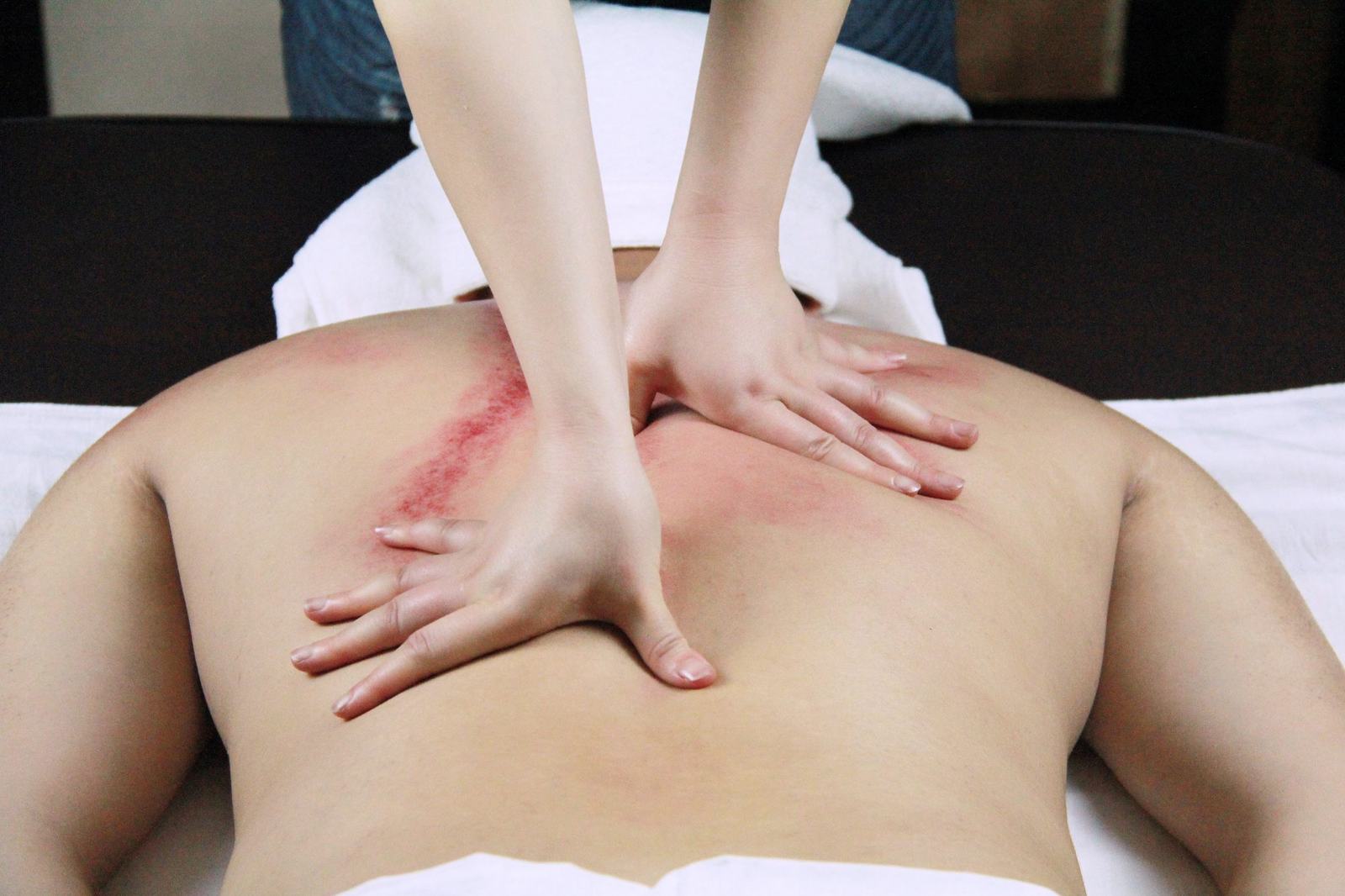
| Liver qi stagnation | Wandering body pain following mood swings, chest and flank oppression, frequent sighing, wiry pulse | Course the liver: Taichong (LR3), Hegu (LI4), Danzhong (CV17), Qimen (LR14), with back cupping glide and counseling |
| Qi-blood deficiency | Dull persistent pain worse with exertion, pale complexion, low energy, sweating on activity | Tonify qi and blood: Zusanli (ST36), Sanyinjiao (SP6), Qihai (CV6), Xuehai (SP10); gentle needling plus dietary support |
| Cold-dampness obstruction | Cold heavy widespread pain, worse with cold and damp, eased by warmth, marked morning stiffness | Warm the channels, disperse cold-damp: Shenshu (BL23), Yaoyangguan (GV3), Yinlingquan (SP9), with gentle moxibustion and cupping |
| Heart-spleen deficiency | Dream-disturbed sleep, palpitations, poor memory, fatigue and poor appetite, general aching | Tonify heart-spleen, calm the spirit: Shenmen (HT7), Anmian, Baihui (GV20), Xinshu (BL15), Pishu (BL20); light needling with moxibustion |
Patterns are determined in person. This list is for orientation only and is not a self-diagnosis tool.
The Evidence
- Acupuncture trials in fibromyalgia are mostly small with positive but limited high-quality evidence; acupuncture is positioned as adjunctive, alongside exercise and sleep management.
—
What to expect: first visit to follow-up
- First visit · about 40 minutesFull history (pain distribution, fatigue, sleep, mood, prior tests), tender-point assessment, pulse and tongue — first confirming the diagnostic direction (excluding other rheumatic and endocrine disease), then building a parallel plan for pain, sleep and exercise.
- Plan discussion · same dayWe explain the pattern diagnosis and frequency, hand you an exercise prescription and sleep-hygiene list, and state which targets we expect to move this cycle and which need pain or mental-health collaboration.
- Weeks 1-4One to two acupuncture sessions weekly, prioritizing sleep and tenderness tolerance; you do low-intensity exercise at home and log three items: pain score, sleep hours, active minutes.
- Weeks 4-8 · review and maintenanceDiary data decide: effective — reduce frequency into maintenance; partially effective — adjust points and the exercise plan; ineffective — re-check the diagnostic direction and discuss referral.
Course of care and follow-up
- Assessment usually runs in 4-6 week cycles
- Once stable, maintenance every 2-4 weeks, gradually shifting the focus to self-exercise and mood management
- Pattern re-assessed yearly or when symptoms change
- With marked depression, anxiety or disability, long-term collaboration with mental health and pain specialists; medication decisions rest with them
When to Seek Care
Before your visit:
- Start with 5-10 minutes of low-intensity activity daily, increasing weekly — no "weekend catch-up exercise"
- A fixed wake-up time matters more than a fixed bedtime; naps under 30 minutes
- Keep a diary of pain, fatigue and sleep to identify aggravating factors (cold, overexertion, emotional events)
Consider an in-person consultation if:
- Widespread pain beyond 3 months with marked fatigue and sleep disruption
- Diagnosed but with large fluctuations and declining daily function
- Significant low mood, loss of interest, or thoughts of self-harm — seek mental health care promptly
Supportive Care
- Exercise: Ba Duan Jin, tai chi or warm-water exercise, 3-5 times weekly for 20-30 minutes, limited by "no added pain the next day"
- Sleep: bedroom for sleep only; screens off 1 hour before bed; warm foot baths help
- Warmth and rhythm: avoid cold damp environments; keep regular routines
- Mood: anxiety and perfectionism often amplify flares — add breathing training and mindfulness
FAQ
Is fibromyalgia "all in my head"?
No. It has a defined mechanism — central sensitization — and the pain is real. Emotions amplify symptoms, but "influenced by mood" is not "faked". The goals are lower pain intensity, better sleep and function, less painkiller dependence — all measurable in your diary.
How soon will acupuncture help?
With sleep and pain tolerance as the leading targets, assessment usually runs in 4-6 week cycles. There is no "cured in a few sessions" shortcut; what can be verified is your diary — pain scores, sleep hours, activity tolerance improving or not.
Want your situation assessed? Book a consultation.
Prepared by licensed TCM physicians · Updated 2026-09
Related case note Hurting everywhere with nothing to find on tests: finding the way into fibromyalgia Read the case note →