
Scope of Care · A
Frozen shoulder
Last updated: 2026-09-20 · Prepared by licensed TCM physicians · Updated 2026-09
Key Points
Frozen shoulder (adhesive capsulitis) is characterized by shoulder pain and restriction of active and passive motion in all directions 鈥 especially external rotation and abduction 鈥 as if the arm were "frozen".
- Peak age 40-60; markedly higher risk with diabetes and thyroid disease
- Naturally evolves through painful, frozen and thawing stages, lasting 1-3 years overall
- Neither "move a lot" nor "not at all" is right: gentle activity in the painful stage, progressive stretching in the frozen stage
- Acupuncture with tuina and exercise therapy is a mainstay of conservative treatment
First, what cannot wait
- Severe pain, deformity and inability to move after shoulder trauma 鈥 rule out fracture and dislocation first
- A red, hot, swollen shoulder joint with fever 鈥 suspect septic arthritis
- Shoulder pain with marked weakness (lifting the arm, external rotation) 鈥 rotator cuff tear must be excluded
- Progressive painless stiffness, or with weight loss and fatigue
- New shoulder pain in anyone with a cancer history 鈥 exclude metastasis
- No improvement in pain or range after 6-8 weeks of proper treatment
Understanding the Condition
Frozen shoulder is not a rotator cuff tear, and nothing "grows" in the shoulder. Its essence is inflammation and contracture of the joint capsule 鈥 the "pocket" wrapping the joint tightens and shrinks, freezing the arm inside a progressively narrowing sleeve: combing hair, reaching the back pocket or fastening a bra becomes hard.
The diagnostic key: both active and passive motion are restricted. You cannot lift it, and neither can someone lifting it for you 鈥 unlike a cuff problem where the arm lifts passively but not actively.
Why It Keeps Coming Back
The "protective stillness" of the painful stage is exactly what drives freezing: the more it hurts, the less you move; the less you move, the more the capsule adheres 鈥 a vicious circle. In diabetes the capsule is prone to contracture, which is why risk multiplies.
Another common mistake is "forcing through it" 鈥 violent stretching aggravates inflammation and damage. The right approach is many small, tolerable sessions daily that maintain and expand range.
Our Pattern-Based Approach
TCM calls it "shoulder congealment" or "leaking-shoulder wind". Around age fifty, qi and blood decline and the liver-kidney fail to nourish the sinews 鈥 the internal ground; wind-cold-damp invasion or strain-induced stasis is the trigger. Patterns: wind-cold invading the shoulder 鈥 cold pain, worse in wind; stasis in the shoulder network 鈥 fixed pain, marked night pain; qi-blood deficiency 鈥 weak aching, slow relief.
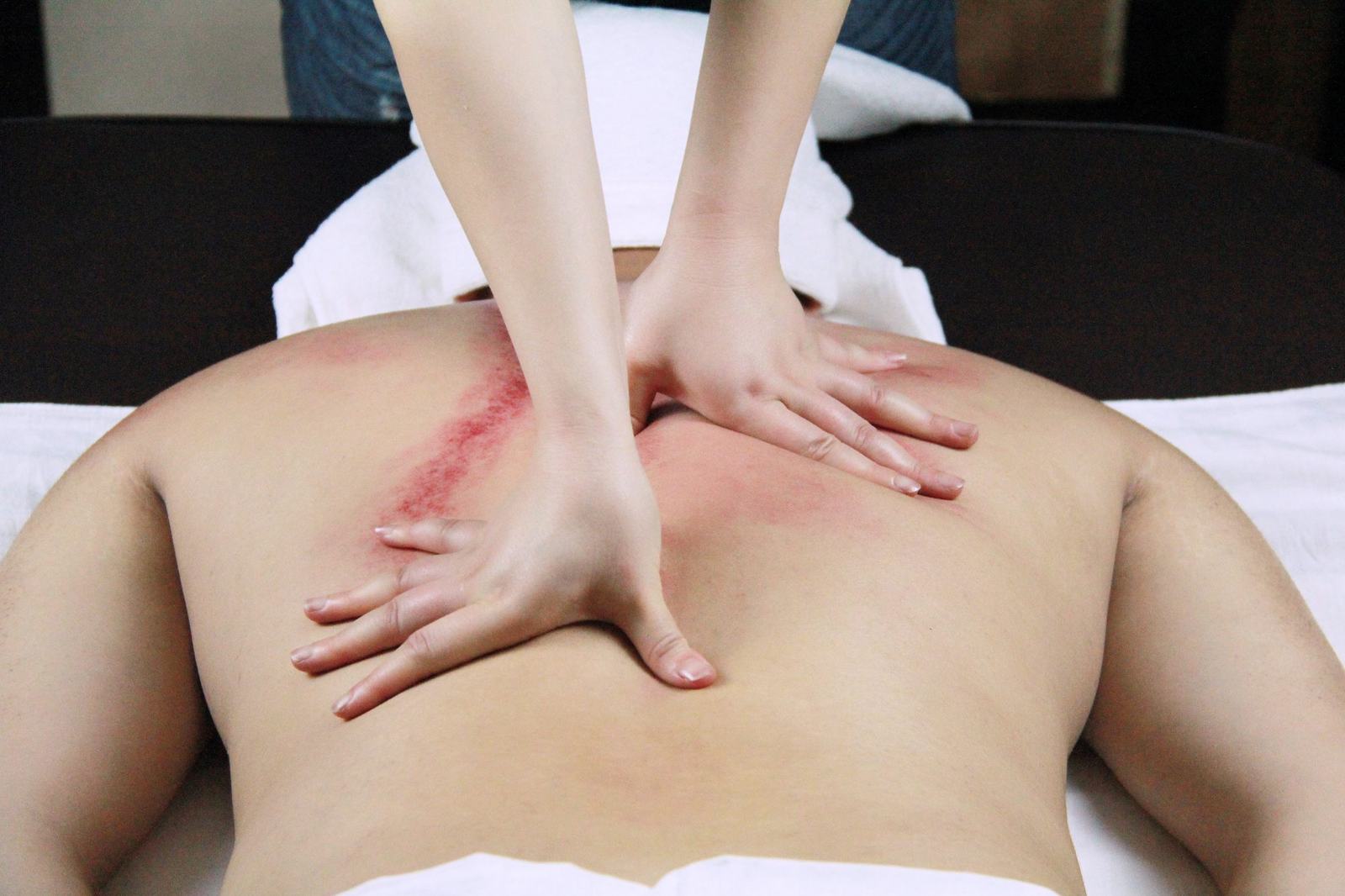
Acupuncture uses the "three shoulder points" (Jianyu LI15, Jianliao TE14, Jianzhen SI9), Tiaokou (ST38) obliquely toward Chengshan (BL57), and ashi points, with tuina, cupping and moxibustion. Our motto: "unblock before you move" 鈥 first ease the channels and the night pain, then guide pendulum and wall-climbing drills at the edge of comfort to thaw range degree by degree.
Common patterns and treatment directions
| Pattern | Typical presentation | Approach |
|---|---|---|
| Wind-cold invading the shoulder | Cold shoulder pain, aversion to wind and cold, eased by warmth, worse in damp weather, limited motion | Dispel wind-cold, warm the channels: three shoulder points, Quchi (LI11), ashi points, with moxibustion and cupping |
| Stasis in the shoulder network | Fixed stabbing pain, marked night pain, joint stiffness, dark tongue with stasis spots | Invigorate blood: Jianyu (LI15), Jianliao (TE14), Tiaokou (ST38) toward Chengshan (BL57), with tuina release and collateral pricking |
| Qi and blood deficiency | Weak dull aching, difficulty lifting, worse with fatigue, pale complexion, longer course | Tonify qi and blood: Zusanli (ST36), Sanyinjiao (SP6), three shoulder points; gentle needling with progressive exercise |
| Liver-kidney deficiency | Around age fifty, weak flabby arm, sore knees and lower back, taut sinews, long-standing stiffness | Tonify liver-kidney: Ganshu (BL18), Shenshu (BL23), Taixi (KI3), three shoulder points, with long-term Ba Duan Jin |
| Cold-damp congealing the shoulder | Heavy cold pain, stiffness as if wrapped, markedly worse in cold damp environments | Warm yang, disperse cold-damp: three shoulder points, Yinlingquan (SP9), Fenglong (ST40); warm needling with exercise therapy |
Patterns are determined in person. This list is for orientation only and is not a self-diagnosis tool.
The Evidence
- An individual-patient-data meta-analysis of ~18,000 participants found acupuncture significantly superior to sham acupuncture and usual care for chronic pain, including shoulder pain.
— Vickers et al., 2012, Archives of Internal Medicine (now JAMA Internal Medicine)
What to expect: first visit to follow-up
- First visit 路 about 40 minutesWe take a history and examine the shoulder (active/passive range, external rotation and abduction angles, strength testing to differentiate cuff problems), read pulse and tongue, and determine the stage 鈥 painful, frozen or thawing 鈥 screening for red flags. Diabetics are advised on glucose control in parallel.
- Plan discussion 路 same dayWe explain the stage, planned points and frequency, and issue a "movement prescription": what to do now, to what amplitude, and when the next review is 鈥 stage-specific requirements.
- Weeks 1-6One to two acupuncture and tuina sessions weekly, focusing on controlling night pain and maintaining and expanding range. You do pendulum swings and wall climbing daily, logging abduction/external-rotation angles and night pain scores.
- Weeks 6-12 路 reviewRange and pain records decide the next step: continue, adjust points, or reduce frequency with home exercise taking over.
Course of care and follow-up
- Assessment usually runs in 4-6 week cycles
- Once night pain resolves and range plateaus, maintenance every 2-4 weeks or purely home-exercise follow-up
- Stage-based management throughout: "unblock" in the painful stage, "unblock plus move" in the frozen stage, "train" in the thawing stage
- With diabetes, coordinate glucose control with endocrinology; if conservative care fails and life quality is severely affected, we assist orthopedic referral (e.g., for capsular distension or manipulation under anesthesia indications)
When to Seek Care
Before your visit:
- Do not fully immobilize during the painful stage: move the shoulder gently within tolerance several times daily
- Pendulum swings: bend forward, let the arm hang, and let the body swing it in circles
- Avoid lying on the affected side; adjust sleep position when night pain is prominent
Consider an in-person consultation if:
- Shoulder pain with restricted motion in all directions for over 2-4 weeks
- Severe night pain disturbing sleep
- Shoulder pain and stiffness after trauma, or with clear weakness 鈥 rotator cuff tear must be excluded first
Supportive Care
- Wall climbing: face a wall, walk the fingers upward, pause a few seconds at the tolerable height
- Towel stretch: hands behind the back gripping a towel, the good hand gently pulling upward
- Warmth: keep the shoulder warm in cold seasons and air conditioning; warm packs help
- Exercise: Ba Duan Jin "hands hold up the sky" to a "tolerable mild stretch" 鈥 never chase pain
FAQ
Will frozen shoulder resolve on its own without treatment?
It can resolve over years, but "waiting" costs 1-3 years of restricted motion and night pain, and some are left with residual stiffness. Proper treatment means a shorter course, lower pain intensity and earlier functional recovery 鈥 not a promise of cure, but fewer detours.
When it hurts, should I move or rest?
Both answers are half right. No violent stretching in the painful stage 鈥 but no total rest either. Many small, tolerable movements daily are exactly what prevents deeper adhesion. At each stage we give you a specific "movement prescription", not a vague "exercise more".
Want your situation assessed? Book a consultation.
Prepared by licensed TCM physicians · Updated 2026-09
Related case note The hand that cannot rise above the shoulder: treating frozen shoulder by stage Read the case note →