
Scope of Care · A
Sciatica
Last updated: 2026-09-20 · Prepared by licensed TCM physicians · Updated 2026-09
Key Points
Sciatica is pain radiating along the sciatic nerve's course 鈥 lower back, buttock, back of the thigh, calf and foot 鈥 most commonly caused by a lumbar disc herniation compressing a nerve root.
- Typical presentation: pain radiating from the low back or buttock down one leg, often with numbness and weakness
- About 90% of disc-related sciatica improves on its own within weeks to months
- Acupuncture and tuina work well for most sciatica 鈥 a strong point of Chinese external medicine
- Cauda equina signs (saddle numbness, bowel/bladder dysfunction) need emergency care immediately
First, what cannot wait
- Saddle (perineal) numbness, bowel or bladder incontinence or retention 鈥 cauda equina syndrome; emergency surgical assessment needed
- Progressive weakness in both legs, or foot drop on one side
- Severe back-leg pain with signs of paralysis after trauma
- Unexplained fever, weight loss, severe night pain 鈥 suspect infection or tumor
- Numbness or weakness spreading progressively
- Pain so severe that standing or sleeping is impossible despite usual measures
- Complete failure of proper conservative care after 6-8 weeks
Understanding the Condition
Sciatica is less a "disease" than an alarm along a "route": radiating pain, tingling or burning from the low back and buttock down to the calf and foot. The most common cause is a lumbar disc herniation or spinal stenosis irritating a nerve root; muscular entrapment such as a tight piriformis can also "pinch" the nerve.
Key distinction: disc-type pain worsens with bending and prolonged sitting; piriformis-type is provoked by sitting pressure on the buttock and specific straight-leg angles. Their treatments differ 鈥 which is why physical examination at the first visit is essential.
Why It Keeps Coming Back
After the flare, people unconsciously tilt and shorten their stride to "dodge" the pain; over time the lumbar-gluteal muscles fall out of balance, fixing the traction and irritation of the nerve root 鈥 pain becomes a pattern, not just a symptom.
Prolonged bed rest does not help nerve recovery: moderate movement promotes the nerve root's mobility and blood supply 鈥 where modern rehabilitation and the TCM idea of "moving to master stillness" meet.
Our Pattern-Based Approach
TCM calls it "lumbago-sciatic pain" or "bi syndrome", along the bladder and gallbladder channels. Patterns: cold-dampness obstruction 鈥 cold heavy pain, worse in cold and dampness; blood stasis 鈥 fixed stabbing pain, worse at night; damp-heat pouring down 鈥 burning pain, bitter taste, heaviness; liver-kidney deficiency 鈥 weak aching of long duration.
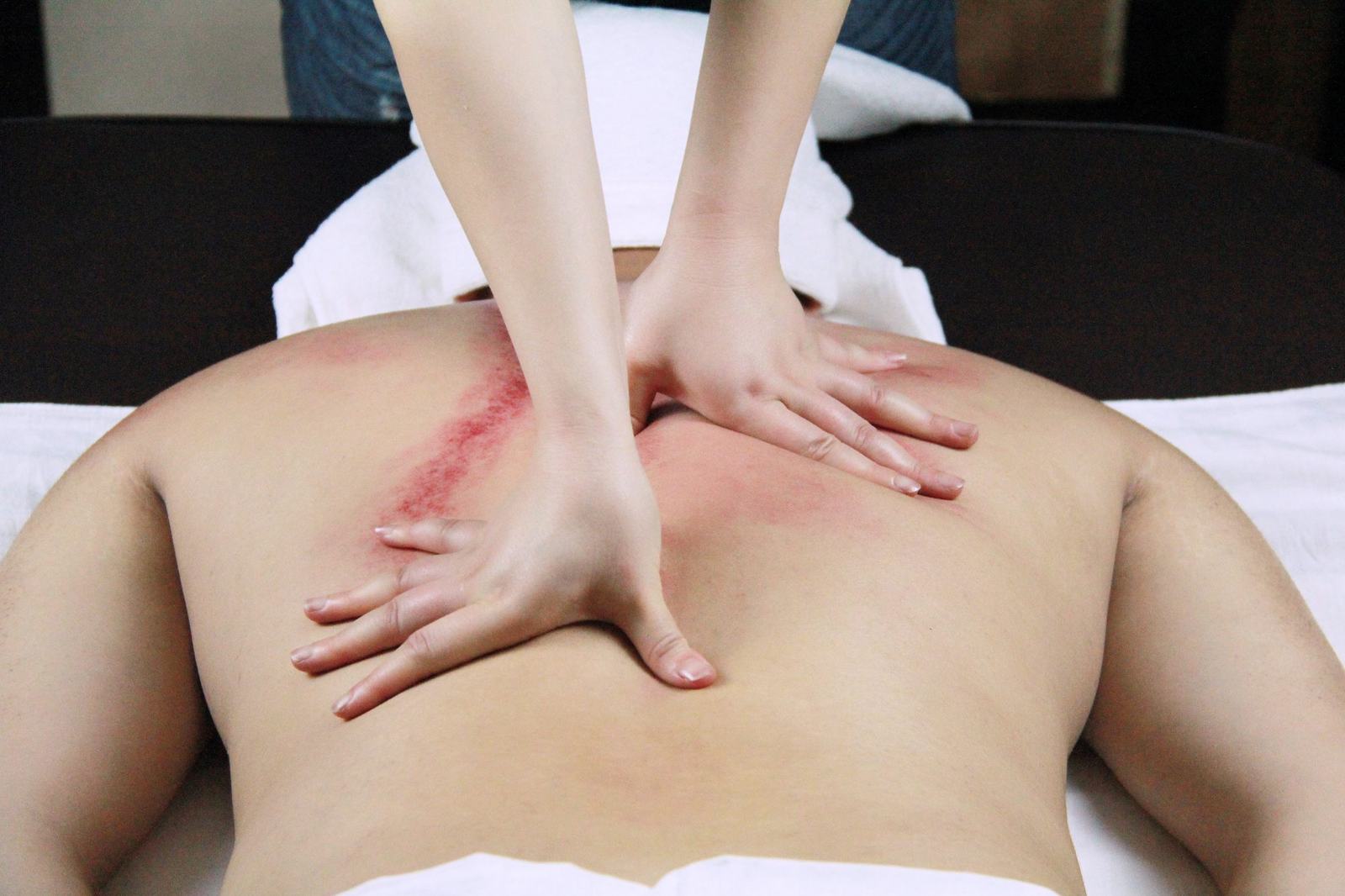
Acupuncture uses Dachangshu (BL25), Huantiao (GB30), Weizhong (BL40), Yanglingquan (GB34), Chengshan (BL57) and Kunlun (BL60) 鈥 "for lumbar pain seek Weizhong"; deep needling Huantiao often draws qi sensation radiating down the leg (a good sign), with lumbar-gluteal tuina and cupping. We equally stress McKenzie extensions and nerve-gliding drills 鈥 putting the "trapped nerve" back on a freely sliding track.
Common patterns and treatment directions
| Pattern | Typical presentation | Approach |
|---|---|---|
| Cold-dampness obstruction | Cold heavy pain along the leg, difficult movement, worse in cold damp weather, eased by warmth | Dispel cold-dampness, warm the channels: Shenshu (BL23), Dachangshu (BL25), Huantiao (GB30), Weizhong (BL40), with moxibustion and cupping |
| Blood stasis blocking the network | Fixed stabbing pain, worse at night, often after sprain, dark tongue with stasis spots | Invigorate blood: Huantiao (GB30), Weizhong (BL40), Geshu (BL17), ashi points, with collateral pricking and tuina |
| Damp-heat pouring downward | Burning leg pain, bitter taste and irritability, dark scanty urine, red tongue with yellow greasy coat | Clear heat, drain dampness: Dachangshu (BL25), Yanglingquan (GB34), Yinlingquan (SP9), Weizhong (BL40); moxibustion avoided |
| Liver-kidney deficiency | Weak aching leg, worse with fatigue, long course, sore knees and lower back, tinnitus | Tonify liver-kidney: Ganshu (BL18), Shenshu (BL23), Taixi (KI3), Huantiao (GB30); gentle reinforcing needling with exercise |
| Qi-blood deficiency | Persistent aching with numbness, worse after sitting or walking, pale complexion, fatigue | Tonify qi-blood: Zusanli (ST36), Sanyinjiao (SP6), Huantiao (GB30), Chengshan (BL57); gentle needling plus dietary support |
Patterns are determined in person. This list is for orientation only and is not a self-diagnosis tool.
The Evidence
- An individual-patient-data meta-analysis of ~18,000 participants found acupuncture significantly superior to sham acupuncture and usual care for chronic pain, including back pain.
— Vickers et al., 2012, Archives of Internal Medicine (now JAMA Internal Medicine) - A Cochrane systematic review found acupuncture more effective than no acupuncture for chronic non-specific low back pain 鈥 the main backdrop of sciatica.
— Cochrane Database of Systematic Reviews, Acupuncture for low-back pain, 2013
What to expect: first visit to follow-up
- First visit 路 about 40 minutesDetailed history, neurological examination (straight-leg raise, strength, sensation and reflexes to localize the affected root), pulse and tongue 鈥 distinguishing disc-type from muscular entrapment, systematically screening red flags, and recommending imaging when indicated.
- Plan discussion 路 same dayWe explain the affected-root assessment, planned points and frequency, activity advice and current contraindications, and exactly when to return urgently or accept referral.
- Weeks 1-4One to two acupuncture and tuina sessions weekly. Targets in order: smaller radiating area, less night pain, restored gait. You record the furthest point the pain reaches (foot/calf/below knee) 鈥 the retreat of this "boundary" is the most intuitive yardstick of progress.
- Weeks 4-8 路 reviewAssessment by radiating range, numbness and strength: continue, adjust points and technique, or move into an exercise-led maintenance phase; non-responders are sent promptly for imaging and specialist consultation.
Course of care and follow-up
- Assessment usually runs in 4-6 week cycles
- Even after radiating pain fades, 4-8 weeks of consolidation follow 鈥 preventing the relapse of "pain leaves first, nerve not yet recovered"
- Then follow-up every 2-4 weeks until function fully recovers
- Strength and sensation are monitored throughout; any sign of cauda equina syndrome or progressive deficit triggers immediate emergency referral
When to Seek Care
Before your visit:
- After 1-2 days of brief rest in the acute phase, resume moderate activity early
- Avoid soft sofas and bending to lift; support the low back when sitting
- Prone McKenzie extensions (if your therapist confirms they fit your type)
Consider an in-person consultation if:
- Leg pain or numbness not easing after 4-6 weeks, or repeatedly flaring
- Clear leg weakness (difficulty lifting the foot) or spreading numbness
- Saddle numbness or bowel/bladder dysfunction 鈥 emergency care immediately
Supportive Care
- Exercise: McKenzie extensions plus nerve-gliding (straight-leg slider), under guidance
- Ba Duan Jin: gentle stretches like "two hands hold the feet"; no deep forward bending in the acute phase
- Posture: lumbar support when sitting; stand up regularly on long drives
- Warmth: keep the lumbar-gluteal region and legs warm; warm packs help
FAQ
Does sciatica always need surgery?
Usually not. About nine in ten disc-related sciaticas improve with conservative care over weeks to months. Surgery is mainly reserved for cauda equina syndrome, progressive neurological deficit, or failure of proper conservative care with severe life impact. We help you walk the conservative path well while monitoring nerve function closely.
Is numbness more dangerous than pain?
Numbness signals compression affecting sensory conduction and deserves careful evaluation; what truly warrants vigilance is "strength loss" 鈥 such as being unable to lift the toes. Worsening or persistent numbness, or any weakness, should be reviewed promptly.
Want your situation assessed? Book a consultation.
Prepared by licensed TCM physicians · Updated 2026-09