
Scope of Care · C
Hemifacial spasm
Last updated: 2026-09-20 · Prepared by licensed TCM physicians · Updated 2026-09
Key Points
Hemifacial spasm causes involuntary, intermittent twitching of the muscles on one side of the face, usually starting around the eye and spreading downward toward the mouth, worse with stress and fatigue.
- The opposite of facial palsy: palsy is "cannot move", spasm is "moves by itself"
- Mostly caused by vascular compression of the facial nerve root; slightly more common in middle-aged women
- Botulinum toxin injection is the mainstream treatment; acupuncture is positioned as an adjunct
- Emotional tension is a universal amplifier — relaxation training suits everyone
First, what cannot wait
- Spasm with sudden facial weakness, slurred speech or limb symptoms — emergency immediately (exclude stroke)
- Bilateral facial spasm — other causes need investigating
- Spasm with hearing loss, tinnitus or facial sensory changes
- Spastic eyelid closure affecting vision
- Rapid expansion of the twitching area or sudden frequency surge
Understanding the Condition
Hemifacial spasm is highly recognisable: an eyelid flicking out of control, increasingly frequent, gradually pulling the mouth corner and cheek — a small storm across half the face whenever tension builds. It does not hurt, but it lives on the face: every twitch happens under other people's gaze.
It is often dismissed as "an eyelid twitch" for years. When the movement spreads from the eye to the mouth corner, or persists even at rest, it is time for a proper assessment.
Why It Keeps Coming Back
Because mainstream treatment — botulinum toxin injection — works well but needs periodic repetition. For those who decline injections or lose response, non-drug adjuncts have their place: easing neuromuscular tension, improving sleep, reducing triggers.
The other reality is the underestimated psychological burden: social anxiety from visible involuntary movement feeds the spasm in return. Treating that loop is part of the treatment.
Our Pattern-Based Approach
TCM names it "facial twitching" and "eyelid tremor", and it always turns on "wind": excess patterns arise from liver wind stirring or wind-phlegm in the channels — rapid frequent twitching, tight facial muscles, greasy coating; deficiency patterns from blood or yin failing to anchor the wind — slow twitching, worse with fatigue, pale complexion.
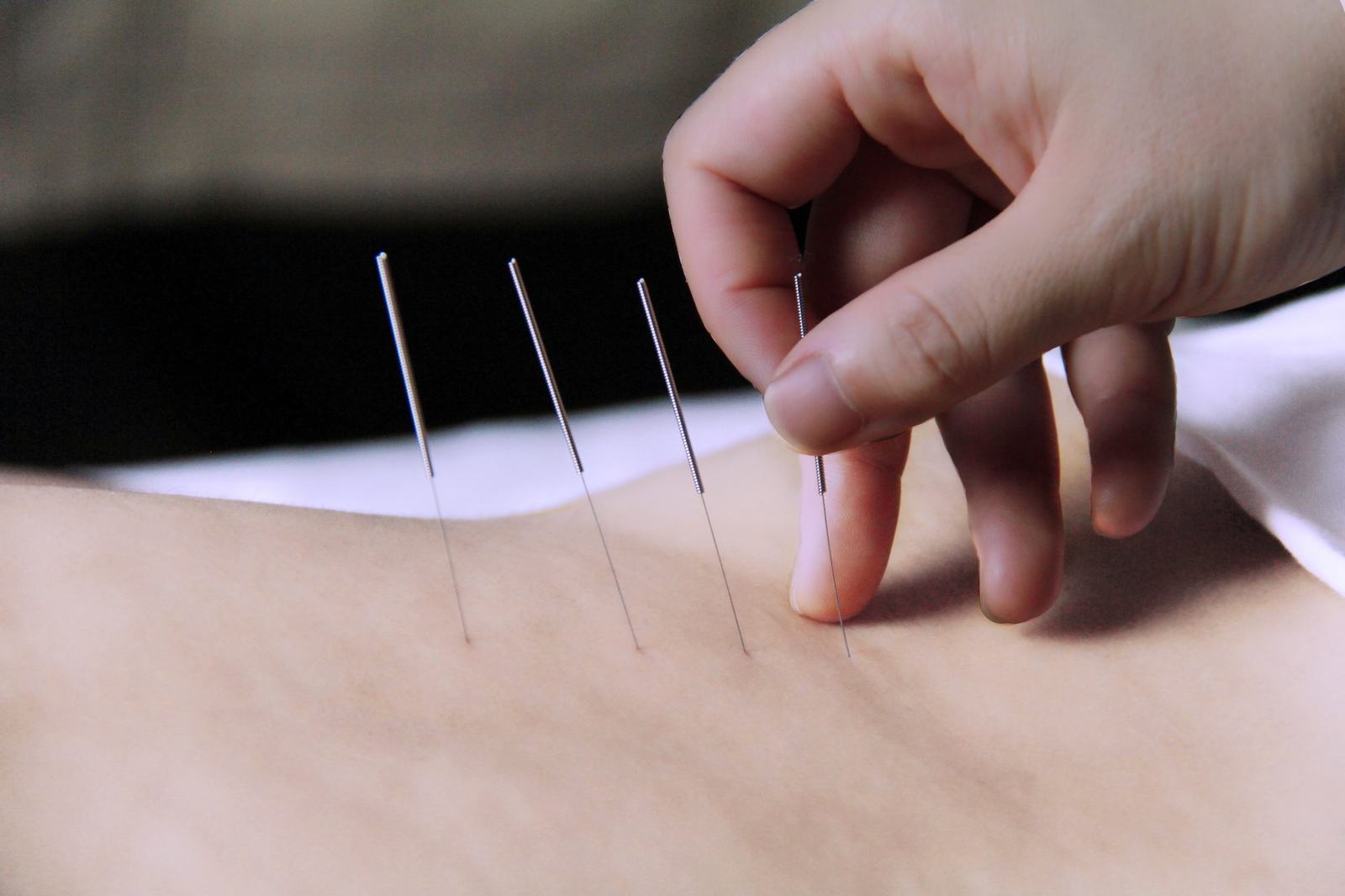
Points combine local Yangbai (GB14), Sibai (ST2), Dicang (ST4), Quanliao (SI18) with distal Taichong (LR3) and Hegu (LI4) to subdue wind; deficiency adds Zusanli (ST36), Sanyinjiao (SP6), Taixi (KI3). Gentle slow stimulation is the rule — overly strong stimulation may provoke. Relaxation training and sleep work run alongside.
Common patterns and treatment directions
| Pattern | Typical presentation | Approach |
|---|---|---|
| Liver wind stirring | Rapid frequent twitching, worse with stress, red face and eyes, irritability | Pacify liver wind: Taichong (LR3), Hegu (LI4), Fengchi (GB20), Yangbai (GB14), with emotional support |
| Wind-phlegm in the channels | Twitching with numbness and swelling of the face, chest oppression, much phlegm, greasy coating | Expel wind and transform phlegm: Fenglong (ST40), Yinlingquan (SP9), Sibai (ST2), Dicang (ST4) — gentle stimulation |
| Blood deficiency stirring wind | Slow lingering twitching, worse with fatigue, pale complexion, palpitations and insomnia | Nourish blood to calm wind: Zusanli (ST36), Sanyinjiao (SP6), Xuehai (SP10), Quanliao (SI18) — gentle with moxa |
| Yin deficiency stirring wind | Long-standing twitching, worse in the afternoon, warm palms and soles, dry mouth, red tongue with scant coating | Nourish yin to calm wind: Taixi (KI3), Sanyinjiao (SP6), Zhaohai (KI6) — slow needling with longer retention |
Patterns are determined in person. This list is for orientation only and is not a self-diagnosis tool.
The Evidence
- Clinical studies of acupuncture for hemifacial spasm are mostly small trials with mixed results and no firm conclusions; we position it as an adjunct alongside mainstream options such as botulinum toxin, with treatment decisions coordinated with neurology or ophthalmology.
— Overall evidence from small clinical trials; limited certainty
What to expect: first visit to follow-up
- First visit · about 40 minutesWe confirm the extent, starting point and triggers, perform a basic neurological screen, take pulse and tongue for the pattern, and recommend neurological assessment (vascular compression work-up) in parallel.
- Plan discussion · same dayWe explain the pattern, the gentle-stimulation strategy, the relationship to botulinum toxin, and a home list of relaxation and sleep measures.
- Weeks 1-4One to two gentle sessions weekly; you keep the twitch diary and follow the sleep and relaxation plan.
- Week 4-8 · first reviewDiary data on frequency and amplitude guides continuation, point adjustment, or parallel evaluation for botulinum toxin.
Course of care and follow-up
- A 4-8 week assessment cycle based on the twitch diary
- Once stable, maintenance every 2-4 weeks shifting toward self-management
- If botulinum toxin is used, acupuncture can run between injection cycles
- Re-evaluate promptly for any change in extent or the appearance of weakness
When to Seek Care
Before your visit:
- Keep a twitch diary: extent, frequency, sleep and stress that day
- Regular routine with moderate caffeine control — fatigue and stimulants are common triggers
- Learn diaphragmatic breathing and other relaxation methods; practise daily
Consider an in-person consultation if:
- Twitching spreading from the eye to the mouth corner or half the face — formal assessment
- Spasm with facial weakness, hearing changes or tinnitus — other causes need excluding
- Eyelid closure affecting vision, or social impact
- Considering botulinum toxin — assessed by neurology or ophthalmology
Supportive Care
- Adequate sleep: fatigue is the first amplifier
- Reduce sustained strong light and screen stimulation; sunglasses when needed
- Emotion management: social anxiety feeds the spasm; psychological support when needed
- Keep the face warm; avoid direct cold wind as a trigger
FAQ
Can hemifacial spasm be cured?
Botulinum toxin works clearly for most people but needs periodic repetition. Realistically: our goal is to lower twitch frequency and amplitude and ease the accompanying tension and insomnia, running alongside — not replacing — mainstream treatment. Any "cure" claim does not fit this condition.
Might needling make the twitching worse?
Proper technique is exactly the opposite: gentle stimulation, slow manipulation, never strong — aiming to lower neuromuscular excitability. If twitching clearly increases after treatment, tell us immediately; that is a signal to adjust the plan.
Want your situation assessed? Book a consultation.
Prepared by licensed TCM physicians · Updated 2026-09