
Scope of Care · C
Parkinson’s disease (adjunct)
Last updated: 2026-09-20 · Prepared by licensed TCM physicians · Updated 2026-09
Key Points
Parkinson's disease is a neurodegenerative condition marked by resting tremor, rigidity, bradykinesia and postural instability, requiring long-term specialist neurological management.
- Levodopa and related drugs are the core therapy — no adjunct replaces them
- Acupuncture is commonly used to support non-motor symptoms: sleep, constipation, pain and mood
- Falls and swallowing problems are the two major threats to quality of life
- "Wearing-off" and "on-off" fluctuations call for neurological adjustment, never self-directed changes
First, what cannot wait
- A fall with head injury, altered consciousness or vomiting — emergency immediately
- Swallowing difficulty with choking or fever — aspiration pneumonia risk
- Sudden severe headache or confusion (subdural haematoma risk)
- Hallucinations, marked emotional collapse or suicidal thoughts
- Clearly lengthening "off" periods or worsening fluctuations — neurology adjustment needed
- Difficulty passing urine or urinary retention
- Significant weight loss or progressively less eating
Understanding the Condition
The Parkinsonian brain gradually produces less dopamine, and the body's "accelerator" grows heavier: pill-rolling tremor at rest, trouble starting movement, slow turning, handwriting shrinking. Non-motor signs — constipation, fragmented sleep, reduced smell, low mood — often appear even earlier.
It is not a dead end but a marathon: medication and rehabilitation set the baseline, while quality of life depends on detail management — sleep, bowel, nutrition, fall prevention, mood.
Why It Keeps Coming Back
Because the non-motor symptoms (broken sleep, constipation, pain, anxiety and depression) often wear people down more than the tremor, and medication often leaves them insufficiently addressed — exactly the field of adjunctive care.
Another key point: medication timing is highly sensitive (levodopa interacts with protein intake), so every thought of "trying acupuncture" or "adding a remedy" must rest on one premise: the medical treatment stays untouched.
Our Pattern-Based Approach
TCM calls Parkinson's "tremor syndrome", rooted in liver and kidney, manifesting as wind: liver-kidney yin deficiency with internal wind gives long-standing tremor with marked rigidity; qi-blood deficiency gives weak tremor, pallor and constipation; blood stasis stirring wind adds fixed tight pain; phlegm-heat stirring wind adds sticky phlegm and restlessness.
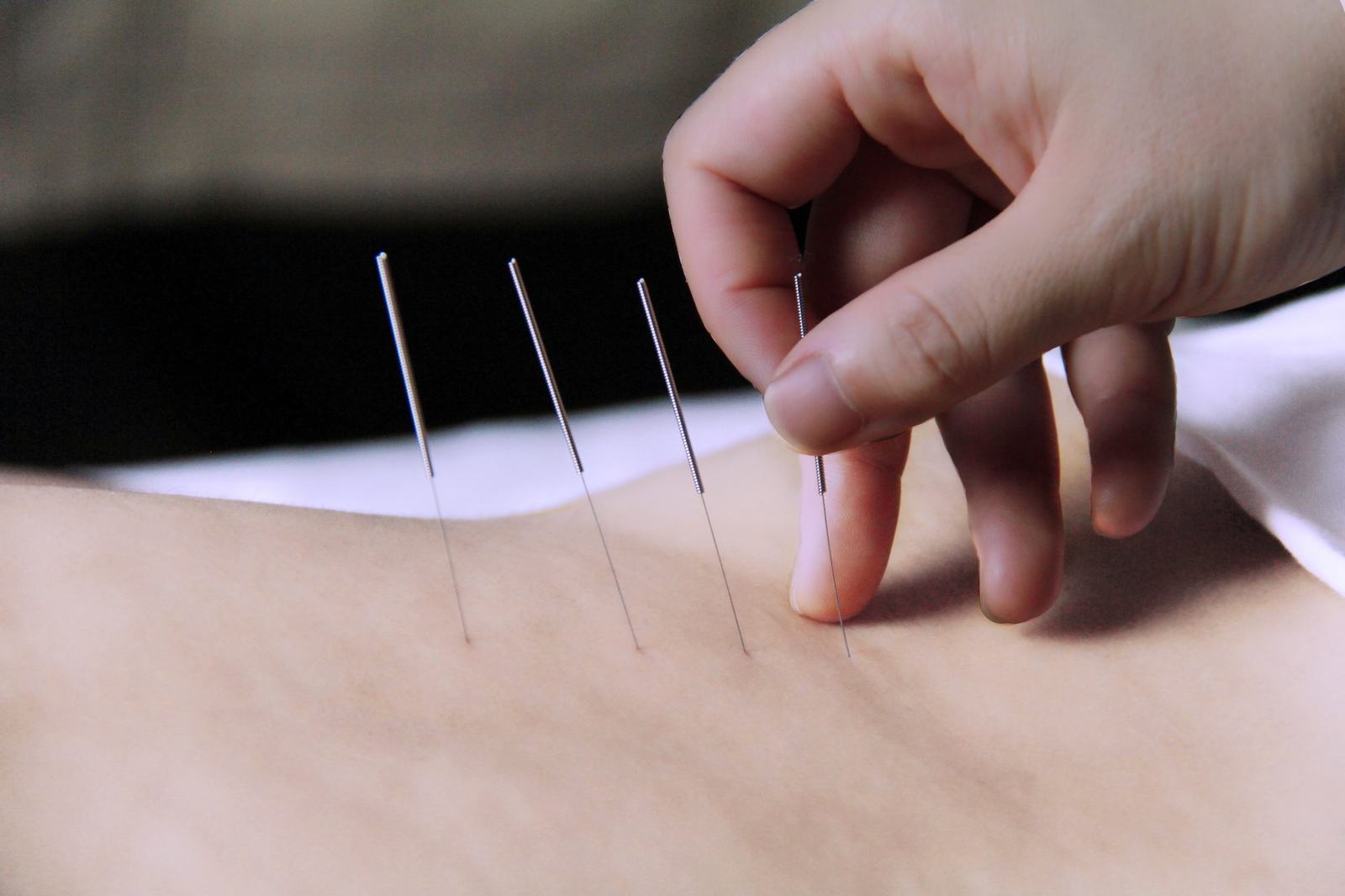
Acupuncture follows "pacify liver wind, nourish liver-kidney, unblock the channels": Baihui (GV20), Fengchi (GB20), Taichong (LR3), Hegu (LI4) as the base, with Taixi (KI3) and Sanyinjiao (SP6) for the liver-kidney and Zusanli (ST36) for the gut; rigid areas receive local slow needling. Constipation and sleep are treated as problems in their own right — they shape daily life as much as the tremor.
Common patterns and treatment directions
| Pattern | Typical presentation | Approach |
|---|---|---|
| Liver-kidney yin deficiency | Long-standing tremor with marked rigidity, sore lower back, dizziness and tinnitus, red tongue with scant coating | Nourish liver-kidney and calm wind: Taixi (KI3), Sanyinjiao (SP6), Taichong (LR3), Baihui (GV20) — slow gentle technique |
| Qi and blood deficiency | Weak tremor, pale complexion, fatigue and short breath, constipation, sweating on exertion | Tonify qi-blood and calm wind: Zusanli (ST36), Qihai (CV6), Sanyinjiao (SP6), Xuehai (SP10) — gentle with moxa |
| Blood stasis stirring wind | Tremor with tight fixed painful limbs, dark tongue with stasis marks | Invigorate blood and calm wind: Xuehai (SP10), Geshu (BL17), Hegu (LI4), Taichong (LR3), with limb tuina |
| Phlegm-heat stirring wind | Tremor with heavier habitus, sticky mouth and phlegm, restlessness and dry stool, greasy yellow coating | Clear heat-phlegm and calm wind: Fenglong (ST40), Yinlingquan (SP9), Quchi (LI11), Taichong (LR3), with a lighter diet |
Patterns are determined in person. This list is for orientation only and is not a self-diagnosis tool.
The Evidence
- Clinical studies of acupuncture in Parkinson's disease are mostly small trials, suggesting possible adjunctive value for non-motor symptoms (sleep, constipation) but no high-quality evidence of any effect on disease course — disease management remains centred on neurology.
— Overall evidence from small clinical trials; limited certainty
What to expect: first visit to follow-up
- First visit · about 40 minutesBring your medication list and "on-off" log. We map motor and non-motor symptoms, medication-to-meal timing, and establish the pattern — stating clearly that disease management stays centred on neurology.
- Plan discussion · same dayWe explain the pattern and points, which non-motor symptom we target first (sleep or constipation, for instance), the frequency, and which changes must go back to neurology.
- Weeks 1-4One to two sessions weekly prioritising sleep, constipation or pain; you keep logging symptoms and medication times.
- Week 4-8 · first reviewLogs guide whether the targeted symptoms improved and how to adjust points; every motor-symptom change is fed back to neurology.
Course of care and follow-up
- A 4-8 week assessment cycle with goals set around non-motor symptoms
- Once stable, maintenance every 2-4 weeks alongside a home exercise plan
- All medication — including levodopa timing — stays led by neurology, never adjusted on our side
- Pattern and fall risk re-assessed yearly or whenever symptoms fluctuate
When to Seek Care
Before your visit:
- Take medication strictly as prescribed; log "on-off" times and wearing-off
- Regular meals and a fixed toilet time to manage constipation
- Fall-proof the home: night lights, non-slip mats, grab rails
- Daily gentle exercise: tai chi and gait training help balance
Consider an in-person consultation if:
- Sudden worsening of rigidity, inability to swallow, or no "on" response after dosing — contact neurology immediately
- Any fall, especially with head strike — seek care
- Hallucinations, severe low blood pressure or new symptoms — review appointment
- Any wish to change medication — discuss with neurology first, never self-taper
Supportive Care
- Fixed medication times; follow your doctor's guidance on spacing from meals (especially protein)
- Slow swallowing: small unhurried bites, sitting upright, prevent aspiration
- Fragmented sleep is common: less daytime napping, less evening fluid, wind-down before bed
- Mood: anxiety and depression frequently accompany Parkinson's — tell your doctor rather than carrying it alone
FAQ
Does acupuncture help Parkinson's disease itself?
To be honest: there is no reliable evidence that acupuncture alters the disease course. Its more useful role is supporting non-motor symptoms — sleep, constipation, pain, mood — to raise daily quality of life. Tremor and rigidity remain the domain of medication.
Can I keep taking levodopa during acupuncture?
Yes — and you must. We will never suggest any change to medication; if you wish to adjust your regimen, discuss it directly with your neurologist. Every adjunct stands on the premise that the existing treatment is untouched.
Want your situation assessed? Book a consultation.
Prepared by licensed TCM physicians · Updated 2026-09