
Scope of Care · A
Tension-type headache
Last updated: 2026-09-20 · Prepared by licensed TCM physicians · Updated 2026-09
Key Points
Tension-type headache is the most common primary headache: a bilateral, pressing or tightening pain of mild-to-moderate intensity, usually without nausea or vomiting.
- The most prevalent headache worldwide; most people experience it at some point
- Typically described as a "tight band" or heavy weight around the head
- Stress, prolonged desk work and neck-shoulder stiffness are the three leading triggers
- Acupuncture is a WHO-listed indication; Cochrane evidence supports its use for frequent attacks
First, what cannot wait
- A sudden "thunderclap" headache peaking within seconds
- Headache with fever, stiff neck, confusion or rash
- Headache with slurred speech or one-sided weakness/numbness — possible stroke
- Headache after a head injury
- A clear change in character: the familiar band-like pain replaced by something unprecedented
- New headache after age 50
- Headache clearly worse with coughing, straining or bending over
Understanding the Condition
Tension-type headache is not "something wrong in the brain" — it is more like muscles and fascia protesting. Hours of forward-head posture and mental strain keep the neck, shoulder and scalp muscles contracted, producing a dull, symmetric pressing or band-like pain.
The key difference from migraine: it is usually bilateral, non-pulsating, and does not stop you walking or speaking. You can push through it — which is exactly why so many people simply endure it for years.
Why It Keeps Coming Back
Because the triggers are woven into daily life: long working hours, screen time, poor sleep, stress, chronic neck-shoulder strain. Painkillers alone loosen the knot while you keep pulling the rope.
When headaches occur more than 15 days a month (chronic tension-type headache), they often feed on painkiller overuse and anxiety or low mood — the more medication you lean on, the more stubborn the cycle becomes.
Our Pattern-Based Approach
TCM places these headaches between "external" and "internal" patterns: bilateral distending pain with sighing and stress points to liver qi stagnation; neck tightness worsened by cold wind to wind invasion of the channels; dull pain after exertion with a pale face to qi and blood deficiency; a heavy, wrapped head with nausea to phlegm-dampness.
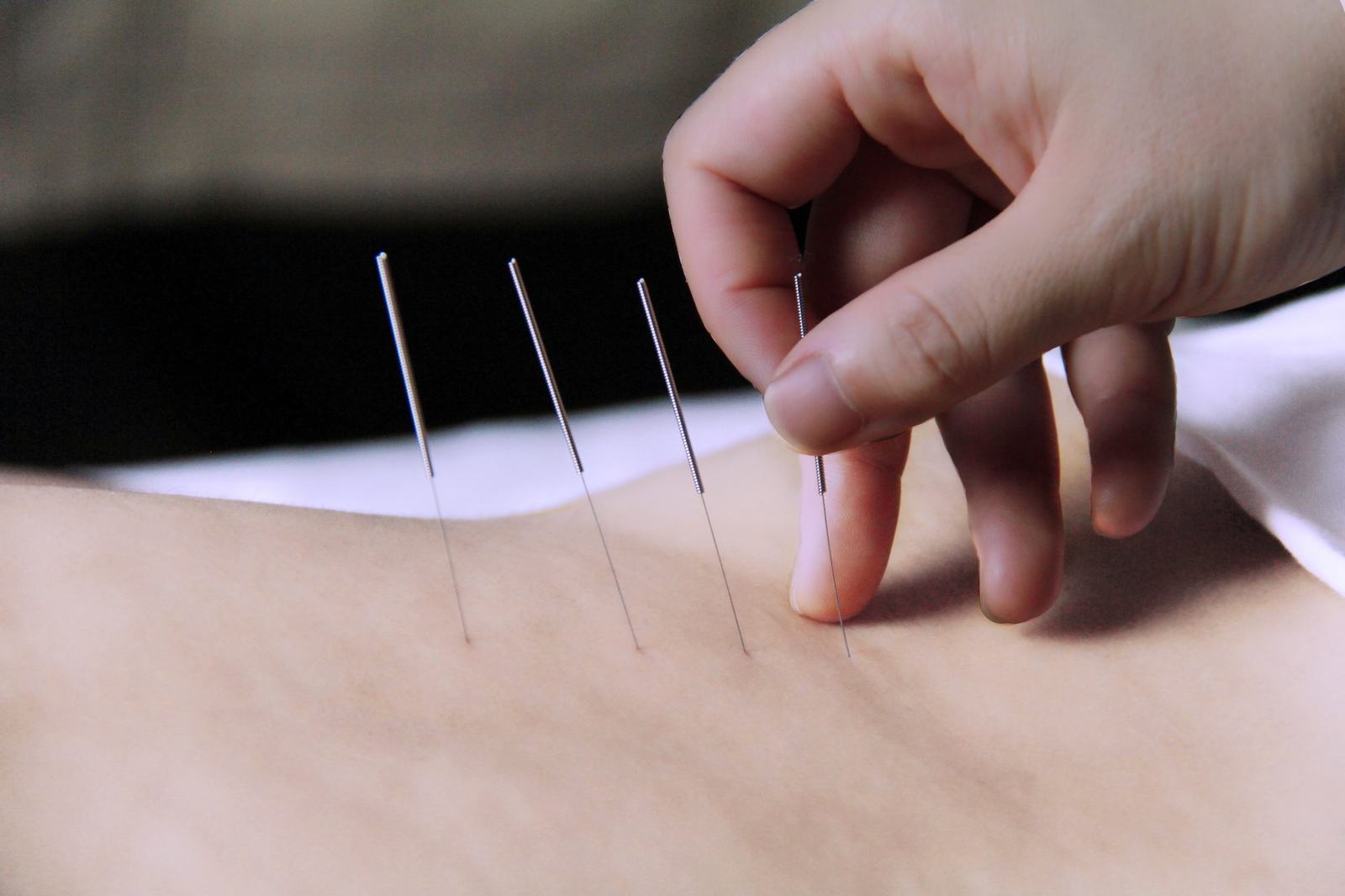
Acupuncture follows the principle "when the channels flow, pain ceases": local points such as Fengchi (GB20), Taiyang and Baihui (GV20) regulate qi and blood in the head, while distal points Hegu (LI4), Taichong (LR3) and Zusanli (ST36) address the whole system, combined with tuina to release stiff neck-shoulder fascia. For recurrent sufferers we treat the interval between attacks as seriously as the attacks.
Common patterns and treatment directions
| Pattern | Typical presentation | Approach |
|---|---|---|
| Liver qi stagnation | Bilateral distending or band-like pain, worse under stress, chest tightness with sighing, sometimes premenstrual | Course the liver and relieve stagnation: Taichong (LR3), Hegu (LI4), Fengchi (GB20), Neiguan (PC6), with counselling and breathing practice |
| Wind invading the channels | Headache extending to the neck, worse in cold wind, stiff tight neck and shoulders | Expel wind and unblock the channels: Fengchi (GB20), Fengfu (GV16), Tianzhu (BL10), Waiguan (SJ5), with tuina and warm compress |
| Qi and blood deficiency | Dull lingering pain, worse after exertion, pale complexion, palpitations, light sleep | Tonify qi and nourish blood: Zusanli (ST36), Sanyinjiao (SP6), Baihui (GV20) — gentle needling plus dietary support |
| Phlegm-dampness obstruction | Heavy wrapped head, dullness, chest oppression and nausea, greasy tongue coating, common in sedentary people | Transform phlegm and descend turbidity: Fenglong (ST40), Zhongwan (CV12), Yinlingquan (SP9), Baihui (GV20), with exercise and diet adjustment |
| Stasis in the neck-shoulder network | Pain radiating from the occiput to the forehead, limited rotation, tender stiff points on palpation | Release sinews and unblock the network: cervical huatuojiaji points, Tianzhu (BL10), Houxi (SI3), ashi points — tuina-focused |
Patterns are determined in person. This list is for orientation only and is not a self-diagnosis tool.
The Evidence
- A Cochrane systematic review (updated 2016) found acupuncture can reduce headache frequency in tension-type headache and is a valuable non-pharmacological option for frequent sufferers.
— Linde et al., Cochrane Database of Systematic Reviews, 2016 - An individual-patient-data meta-analysis of ~18,000 participants (Vickers et al., 2012) found acupuncture significantly superior to sham acupuncture and usual care for chronic pain, including headache.
— Vickers et al., 2012, Archives of Internal Medicine (now JAMA Internal Medicine)
What to expect: first visit to follow-up
- First visit · about 40 minutesBring your headache diary and prior tests. We take a full history, assess the neck and shoulder muscles, read the pulse and tongue, and establish a pattern diagnosis — first excluding anything that needs referral.
- Plan discussion · same dayWe explain the working diagnosis, planned points and frequency, the tuina arrangement, and when the first review will happen.
- Weeks 1-4One to two acupuncture-plus-tuina sessions weekly, aimed first at reducing attack frequency and the band-like pressure. You keep logging the diary and adjusting desk habits.
- Week 4-6 · first reviewDiary data guides whether we continue, adjust points and technique, or move to maintenance every 2-4 weeks.
Course of care and follow-up
- Assessment usually runs in 4-6 week cycles (matching the Cochrane trial course lengths)
- Once attacks are stably reduced, shift to maintenance every 2-4 weeks with progressively longer intervals
- Neck-shoulder muscle status is re-checked at every visit — relapse usually begins with "back to the desk"
- If migraine or medication-overuse headache is suspected, we recommend joint management with a neurologist
When to Seek Care
Before your visit:
- Keep a headache diary: timing, duration, stress and sleep that day
- Stand up and move your neck and shoulders every 40-50 minutes
- Check your pillow height and desk posture first — neck-related triggers are often missed
Consider an in-person consultation if:
- Attacks several times a week, or painkillers more than twice weekly
- No response to routine measures; work or sleep is affected
- Ongoing neck stiffness, arm numbness or other signs of a neck problem
Supportive Care
- Neck release: 10 minutes daily of self-massage and warm compress over Fengchi and Tianzhu area
- Screen hygiene: keep the monitor an arm's length away; blink and refocus into the distance
- Stress management: regular aerobic exercise (brisk walking, swimming) beats "pushing through"
- Sleep regularity: fixed wake-up time; avoid weekend catch-up sleep that disrupts rhythm
FAQ
How long does a course of acupuncture take?
Typically 1-2 sessions per week for 4-6 weeks — close to the course lengths used in the Cochrane trials. Progress is judged from your own headache diary, not from promises of a quick fix.
How is it different from migraine? Does it matter?
It matters. Tension-type headache is usually a bilateral band-like pressure; migraine is usually one-sided, throbbing, with nausea and light sensitivity — and the two can coexist. Strategies differ, which is why pattern and type assessment comes first.
Want your situation assessed? Book a consultation.
Prepared by licensed TCM physicians · Updated 2026-09